Sotheby's International Realty·7,572 views
Pump Hill, Calgary — $3,950,000
A rebuilt mid-century home on a rare quarter-acre cul-de-sac lot. Built entirely from the listing's photography, with exteriors virtually staged across seasons. No shoot.
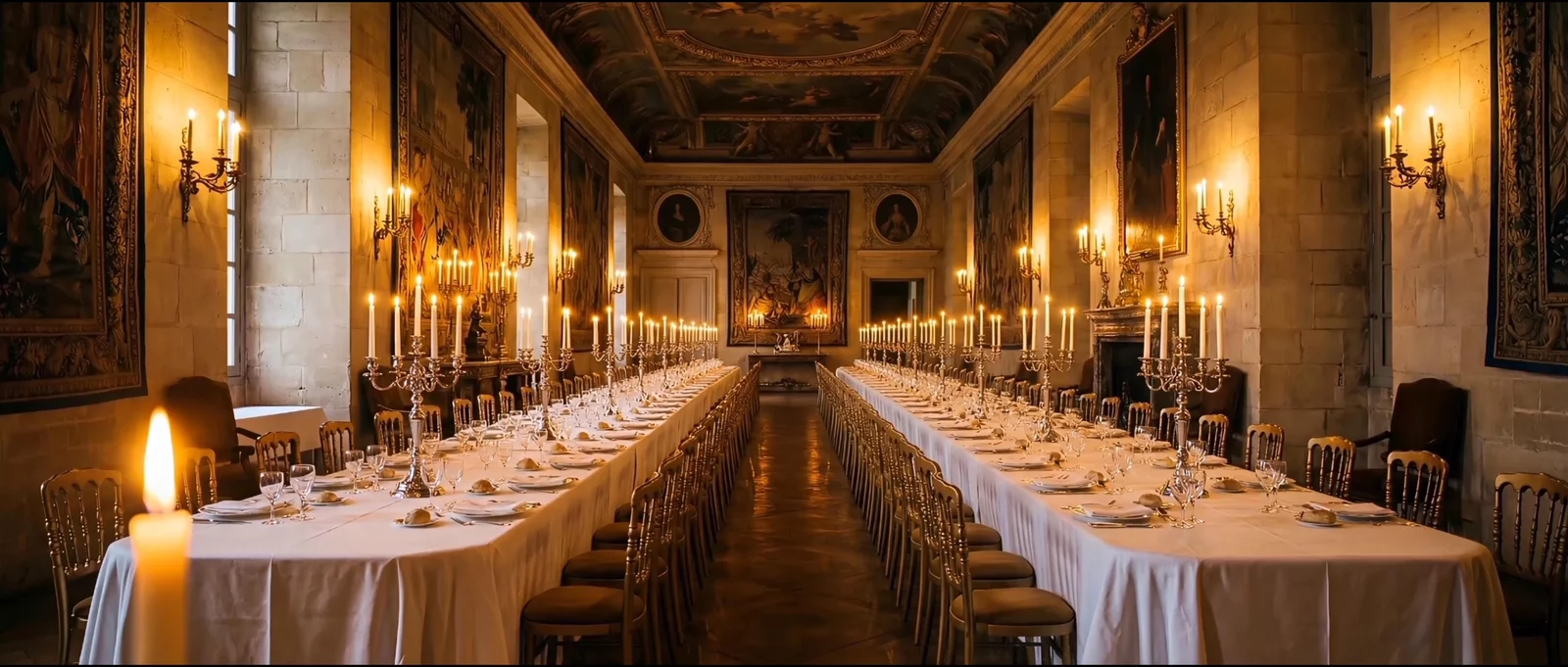
The Fouquet Case Study — Trailer
I build video from still images.
Generative video systems, and the films they produce. Toronto.
Listing and property video for agents at Sotheby's and Compass.
Generated video invents things. A window that isn't there, a hallway that doesn't connect. That's the reason AI video hasn't been usable for real listings — a walkthrough that shows a room the buyer won't find is a misrepresentation problem, not a style problem.
So accuracy scales with the source. Listing photos give you a cinematic piece with artistic transitions. Add a floor plan and the space becomes spatially accurate. Start from a Matterport or iGuide scan and the camera moves through the property's actual geometry — every room, every angle, nothing invented.
That constraint is the product. It's what makes the output usable in a listing appointment rather than just a feed.
I come from software. Every film on this page came out of infrastructure I built.
The pipeline. Python and GCP — Cloud Run, Cloud Tasks, Cloud Storage — carrying a brief from script ingest through to a finished, graded film. Modular model integrations for Veo, Runway, Gemini, Midjourney, Flux, ElevenLabs, and Suno, so a model can be swapped without touching the rest of the system.
The agent loop. The interesting part isn't automation, it's iteration. A shot goes through dozens of prompt refinements to find the one that holds up, instead of settling for the third generation because the fourth is tedious. Volume comes from iteration being cheap, not from decisions being automated.
Determinism. Some pieces skip generative models entirely — data and motion graphics rendered straight from code. Others constrain generation against real geometry from a 3D scan. Knowing when not to generate is most of the craft.
Before this. Three years building AI systems for clients: semantic search over 23,000+ scraped and normalized profiles replacing a legacy keyword matcher; a multimodal analytics engine combining image, speech-to-text, and prosody detection for real-time assessment; video ingestion infrastructure for a recruitment platform.
Spisce — short-form history and strategy.
Across the channel: 1.55M organic views and 8,000 followers in four months, no paid distribution. ~80% average view duration, with 97.5% of watch time from non-followers.
Most clients already have the assets — listing photos, architectural renders, 3D scans, archive images. I build motion out of what exists rather than scheduling a shoot.
Every piece is AI-produced end to end: script, image generation and treatment, motion, voice, music, edit. Runway, Veo, Gemini, Midjourney, ElevenLabs, Suno, finished in CapCut Pro.
100+ finished pieces since January, and the pace picked up once I moved into real estate, where the source material makes the output far more deterministic. One brief in, one finished film out, same day.
I read retention curves, not vanity metrics. Where people drop off decides the next piece.
Lanre Adebayo — Toronto