2,000+ Uber Rides Later: A Different Take on Product-Market Fit.
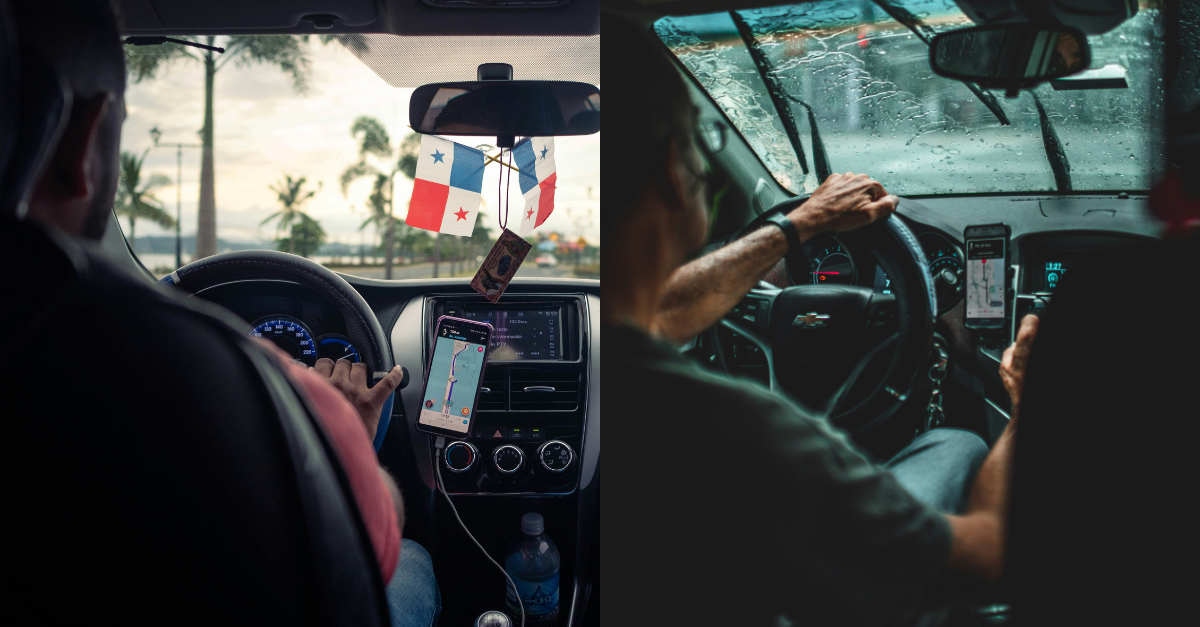
I'm someone who, for a time, lived in my car. Not in the homeless sense, but in the professional driver sense. When I tell you I averaged 200 to 250 Uber rides a month—from the early morning airport runs when the world is still dark, to the late-night pickups downtown when the energy is pure chaos—I'm not bragging. I'm setting the stage. I saw it all, and I saw the same thing every single time: a small miracle.
Think about it. I'd get a ping. A perfect stranger. They don't know me. I don't know them. They'd get into a two-ton metal box I'm controlling, trusting me with not just their destination, but their life, all based on a tiny picture and a 4.98-star rating. They'd sit a foot behind me, and for 10 or 30 minutes, we're locked in this quiet, shared space. Then they'd vanish. No screaming, no conflict, no real human friction. Just a ding on my phone and a deposit in my account.
That's insane.
The fact that you can have this decentralized system of anonymous actors behave in such a predictable and safe way, with largely no human intervention, is a testament to something deeper than just an app. It's coordination on a level that borders on science fiction.
But for a long time, I didn't see the science. I just saw my own little corner of the machine—my car, my rating, my next fare. I chased my own kind of product-market fit within Uber's system, the product in this case being a ride with me.
And that's when I figured it out. All the code, the GPS, the slick app interface… it's all just plumbing. It gets me to the curb and the rider into my car. But the real product, the thing Uber is actually selling and I am actually delivering, isn't the transportation. It's the feeling. It's the quiet, safe, predictable bubble where, for a few minutes, their stress about being late or their fear of a sketchy neighborhood just… evaporates. My job wasn't to drive; my job was to be a mood manager. A feelings delivery system. And figuring out how to bottle that feeling consistently—not just for one ride, but for hundreds, back-to-back—was the ultimate hack. That's the real product-market fit hiding in plain sight.
Part 1: My Accidental "Mini-PMF" – From People-Pleasing to Sustainable System
Let's be clear: I'm not a "people person." I'm not outgoing. My natural state, especially when unchallenged, is quiet. Soft-spoken. I'm not the guy you'd picture lighting up a car with conversation. So, when I started driving for Uber, I figured I'd just be… competent. Efficient. A quiet guy who gets you from A to B. That felt enough.
For about the first two weeks, it wasn't.
In my head, being a "good" driver meant being a great host. It was performance art. I'd initiate conversations—awkward, forced questions about their day. I'd curate a playlist, asking if they had a music preference. I'd offer mints. I was trying so hard to please, to be the memorable, chatty, extra driver that surely earned the five stars. Each ride was a high-energy mini-podcast I was hosting while simultaneously navigating traffic. I was over-delivering.
And I was exhausted.
It wasn't just physical tiredness. It was emotional. Every ride became a transaction that drained me. I was performing and driving, two high-focus tasks, and the math didn't work. You can't sustain that for 30 rides a day. I was burning my own fuel to keep someone else's lights on for 15 minutes. It was unsustainable.
Then, I noticed the stats. Around the end of the first month, I saw I had a perfect 5.0 with over 200 rides. It hit me like a sports stat—a perfect quarterback rating. I wanted to keep it. But I couldn't keep up the act. So I reverse-engineered it. If 200 people had given me five stars already, what was I already doing right, even before I started trying so hard?
I stopped asking, "What more can I give?" and started asking, "What's the minimum viable feeling that gets a five-star?"
That flipped everything. The rating, I realized, isn't a logical scorecard for navigation efficiency. It's an emotional receipt. It's not "Did you take the optimal route?" It's "How did you make me feel during those 20 minutes in your moving metal box?"
So I built a system. A checklist for the feeling:
- Clean Car (The Stage): It doesn't have to be sterile, but it has to feel like it's theirs. No crumbs, no lingering smells. It creates a blank, neutral canvas.
- Efficient Pickup (The First Impression): Get there fast and safe. Wait without visible annoyance. This builds immediate, silent trust.
- Warm but Neutral Greeting (Setting the Baseline): A simple "Hi," warm but not over-eager. It says "I see you, I'm professional," without demanding a response.
- The Assumption of Silence (The Default): I assume you don't want to talk. 95% of the time, you don't. This removes the pressure.
- The Optional Chat (The Positive Surge): If they lean in, if they ask a question, if their body language opens up—then I engage. But only then. The conversation is a bonus, not the baseline.
- The Non-Negotiable Thank You (The Closing Ritual): No matter what happened, the ride ends with a sincere "Thanks for the ride." It's the punctuation mark that frames the whole interaction.
The core insight? I wasn't in the transportation business. I was in the emotional baseline management business. I set the bar low and neutral—clean, quiet, safe. That alone covers 4 stars. Getting to 5 is easy from there: you either slightly exceed it with a simple "thank you," or you greatly exceed it with a genuine conversation. Both are low-energy lifts if you're starting from neutral.
I moved from performing a personality to running a system. It wasn't about being the most exciting driver. It was about being the most reliably unremarkable one. The one whose car you forgot, but whose ride left you feeling quietly, positively, fine. That is efficient emotional labor.
And I didn't know it at the time, but I had just scaled my own micro-business. I stopped being a burning-out startup founder trying to wow every single user, and became a sustainable, scalable service. The system did the work.
Part 2: The Hidden PMF Engine and PMF's Evolution
Okay, so I had my system. Clean car, neutral baseline, optional chat, inevitable thank you. It worked. My rating stayed perfect. But here's the thing about making a system work—you start to notice all the ways the world tries to break it.
This is where I learned the difference between having a theory and actually executing it day-in, day-out. Because driving isn't just about driving. It's hours alone with your brain. You get hungry. You need to pee. Some guy in a BMW cuts you off. You drove 15 minutes to pick someone up and they cancel as you arrive. You get stiffed on a tip after going above and beyond. The passenger smells. The passenger is rude. You're not making enough money.
Each of these is an emotional leak. A crack in your carefully constructed neutral baseline. Your face tightens. Your voice gets flat. You sigh. Suddenly, your car doesn't feel like a neutral, safe bubble anymore. It feels tense. Charged. And the passenger feels it immediately. They don't know about the BMW or the cancellation. They just know the vibe is off. Click. Four stars. Maybe three.
That was my real education. The product wasn't my driving. It was my emotional state. My car was an extension of my mood. And to deliver my "minimum viable feeling" consistently, I had to manage a thousand variables, both inside and outside the car.
I distilled it down to three non-negotiable keys for this "scaled" version of my service:
- You have to genuinely love driving. Not just tolerate it. Love it. The feel of the wheel, the rhythm of traffic, the flow. Because when everything else sucks, that intrinsic enjoyment is the fuel that keeps you from leaking resentment.
- You need a brutally short emotional memory. That bad ride? Over. The rude passenger? Gone. The missed tip? Erased. The next ride is a completely new transaction, and it requires a fresh, neutral baseline. You can't carry the last one's baggage into the next one's backseat.
- Your default setting has to be genuine neutrality. Not fake cheer, not brooding silence. Just calm, quiet competence. This neutral body language and tone is your firewall. It prevents negative emotions from seeping out, and it makes any positive uptick—a smile, a thank you, a good conversation—feel like a gift.
This, I realized, was the hidden engine. It wasn't about being the best driver. It was about being the most consistently un-upsetting driver. The system—my car, my routine, my checklist—handled the "what." These three keys handled the "how," especially on the days when the "what" felt impossible.
And without knowing it, I had stumbled into a much bigger truth about Product-Market Fit. What I was doing in my Honda Civic was a tiny, perfect mirror of what happens to every successful product as it grows. They go through two distinct stages.
Stage 1: Tribal PMF (The Honeymoon Phase)
This is the startup phase, both for a company and for me as an eager new driver. The goal is Find Your Tribe. You're not for everyone. You're for the people who get it. You lean into personality. You do the quirky things. Early Lyft had fist bumps and a fuzzy pink mustache. Uber had "everyone's private driver" cool. I was playing music and forcing conversations. The promise is delight. You're trying to create a feeling so specific and potent that your small group of users not only love it, they have to tell their friends about it. The risk of putting some people off is worth it, because you're not for them anyway.
Stage 2: Scaled PMF (The Engine Phase)
This is the phase I eventually settled into, and where massive platforms like Uber live. The goal shifts from finding a tribe to Managing the Feeling at Scale. It's not "for us crazy few" anymore. It's "for nearly everyone." And "everyone" is messy. Suddenly, personality is a risk. Your quirky joke might offend. Your edgy feature might confuse. My curated playlist might annoy someone.
So, you systematize. You optimize for the lowest common denominator of positive feeling. In Uber's case, that feeling is "safe, reliable, no-surprises transportation." To scale that to millions:
- The Promise gets refined: It's no longer "Wow, what a fun ride!" It's "I arrived safely and without stress." Clear. Neutral. Reliable.
- You shed the quirks: The mustaches disappear. The free water and gum vanish. The app's design becomes cleaner, simpler. Why? Because a mustache isn't core to "safe transport." In fact, for some people, it's weird. My attempts at being a chatty tour guide had to go for the same reason—it wasn't core to the promise, and it introduced risk.
- You build Systemic Neutrality: The entire operation is engineered to prevent emotional leaks. The app handles payment so there's no awkward money talk. The GPS handles routing so I can't get "lost." Ratings create accountability. The system is designed to make my job—and thus the rider's experience—as smooth and emotionless as possible.
The Bridge: The Personality Paradox
This is the hard transition. The shift from Tribal PMF to Scaled PMF feels like losing your soul. The product gets "blander." The edges sanded off. As a driver, I stopped being "the fun guy" and became "the reliable guy." What looks like "selling out" from the outside is actually the brutal economics of scale. You trade the high-variance, high-reward delight of a tribe for the steady, dependable, low-risk satisfaction of the masses.
My three keys—love the core, short memory, neutral baseline—are what's required to man that scaled system. When the system itself can't eliminate the friction (traffic, bad passengers, life), the human element has to become the final, leak-proof buffer. I am the shock absorber between the chaotic real world and Uber's promise of a seamless ride.
That's the hidden PMF engine. It's not just about building something people want. It's about building a system—and finding people who can operate within it—that reliably delivers a specific feeling, day after day, at the terrifying scale of millions of anonymous interactions. It's turning a fragile human promise into a robust industrial process.
Part 3: Expanding the Framework – The "Feelings-First" Lens on PMF
So, what's the takeaway?
The traditional way we talk about Product-Market Fit is simple: "Are you building something people want?" It's a binary, almost sterile question. Based on my 2,000 rides in the front seat, I'd argue that's only half the equation—and the easy half at that.
The real, messy, human truth is deeper. Real PMF is about making people feel the right way, every single time, even when the world is trying its hardest to screw it up. The "it" they want isn't just a function; it's a feeling. Uber promises more than a car. It promises the feeling of "I don't have to think; I'll get there safely." My little product-within-a-product promised more than a ride; it promised "No weirdness. Just quiet competence."
Once you look through this "feelings-first" lens, PMF stops being a mystery and starts looking like a system you can engineer. It breaks down into a few core principles:
1. The Promise is a Feeling, Not Just a Feature.
You're not just promising an outcome (a ride, a delivered meal, a task done). You're promising a vibe that accompanies it. Safe. Effortless. Reliable. Premium. Fun. The promise is the anchor. My promise was: "You will feel like you are my only passenger today, and you will arrive un-bothered."
2. Consistency Over Perfection.
No one hits a home run every time. But you can't strike out either. The goal isn't 500 out of 500 "Wow!" experiences. It's 495 out of 500 experiences that are, at bare minimum, "Okay, that was fine." And of those 495, maybe 20 are "Wow!" The system is designed to make "fine" the floor, not the ceiling. My checklist was my insurance policy for a "fine" floor. The moments of great conversation were the "Wow!" bonuses.
3. Design Against Emotional Leaks.
This is the big one. The system—be it an app, a company process, or a driver's daily routine—must be ruthlessly engineered to prevent negative emotions from ever reaching the user. Uber's seamless payment means no awkward money talk. Their GPS routing means drivers can't "get lost." My rule of a short emotional memory meant my bad ride #47 didn't ruin your ride #48. You have to plug every conceivable leak where frustration, disappointment, or anxiety can seep into the experience. You are a mood curator.
Where Most People Get Stuck: The Two Necessary Stages
What I learned in my car is the universal path to scalable PMF, which is Stage 2. But you can't start there.
Stage 1: The Founder's Honeymoon. This is you, bleeding your personal energy into every interaction. It's high-touch, deeply personal, and full of personality. You are over-delivering to a small tribe who loves you for it. Think Lyft's fist bumps. Think a founder personally onboarding every user. The wins feel electric, and the risk of a negative reaction is worth it because your tribe's love is so loud. But it burns you out.
Stage 2: The Engine of Scale. Eventually, you run out of fuel. That's when you have to build a system. You stop asking, "How can I delight everyone?" and start asking, "What's the minimum viable feeling we can promise and deliver consistently to almost everyone?" You optimize for reliability, not peak delight. You sand off the quirky edges that made your early adopters swoon but might alienate the next million users. You engineer neutrality into the very architecture.
This is what I call The Personality Paradox. It looks like "selling out" to outsiders. Why did Lyft get rid of the fist bump? Why did Uber stop the free water? Why did I stop playing my music and initiating conversations? It's because personality, at scale, is a liability. What delights 10,000 can annoy or confuse 10 million. The feeling evolves from "Wow, this is magical and just for me!" to "Thank God, I can always count on this."
4. Competitive Parity on Feeling.
Finally, your managed feeling can't exist in a vacuum. It has to be at least as good as the alternative's feeling. If your competitor's app makes people feel "safe and effortless," your promise of "a fun adventure" had better make them feel significantly more delighted to offset any risk. Competing on features is a race. Competing on a reliably delivered feeling is a moat.
Once you see this framework, you see it everywhere. Amazon's feeling is "It will arrive, and returning it is painless." Apple's is "It will just work." My own little Uber service was "You'll get there without a single moment of social anxiety."
Building something people want is the first click of the lock. Building a system that consistently makes them feel the way they want to feel—that's turning the key and opening the door. And keeping it open for good.
Part 4: Conclusion – The PMF Mindset Shift
So here's the reframe. The standard question for founders is: "Are we building the right thing?"
But after seeing the miracle of a million anonymous people a day getting into a million stranger's cars and not only surviving but expecting it to work, I think that question is incomplete. It's the starting point, not the endgame.
The "Feelings-First" Framework asks the deeper, operational question: "Are we building the system to consistently deliver the right feeling?"
Because you can build the "right thing" and still fail. You fail when the experience of using it leaks frustration. You fail when delivering it burns out your team. You fail when the quirky charm that won your first 1,000 users becomes a confusing burden for the next 10,000.
And you have to know which game you're playing:
- Are you in Stage 1? Are you the founder-driver, spending every ounce of your personal energy to create a delightful, tribal feeling so powerful that your users have to talk about you? This is where you light the fire.
- Or are you in Stage 2? Are you building the engine of scale, engineering a reliable, neutral-positive system designed to not leak and not burn out as you serve the masses? This is where you keep the fire contained and warming everyone's home.
My journey from an exhausted performer trying to be everyone's best friend to a sustainably 5-star driver running a leak-proof mood-management system was, in miniature, this exact journey.
Look at the products you use every day. Look past the features. Ask yourself: What feeling is this thing engineered to deliver? Is it the manic, charming, high-touch energy of Stage 1, where personality is the point? Or is it the calm, sterile, utterly reliable functionality of Stage 2, where personality has been systematically removed as a risk?
Sometimes, we miss the magic of the early days. We mourn the fist bump, the free water, the sense that we were part of a special club. But that nostalgia is just us recognizing the transition from one kind of excellence to another—from the unscalable art of the honeymoon to the brutal, beautiful engineering of the everyday miracle.
The real Product-Market Fit isn't a moment of discovery. It's the relentless, daily work of bottling a feeling and building a machine that can pour it out, for a stranger, over and over again, without ever spilling a drop.